News & notesPolicy & Market
Do you know? An Ontario fast-charging station earns its cheaper power rate by staying idle
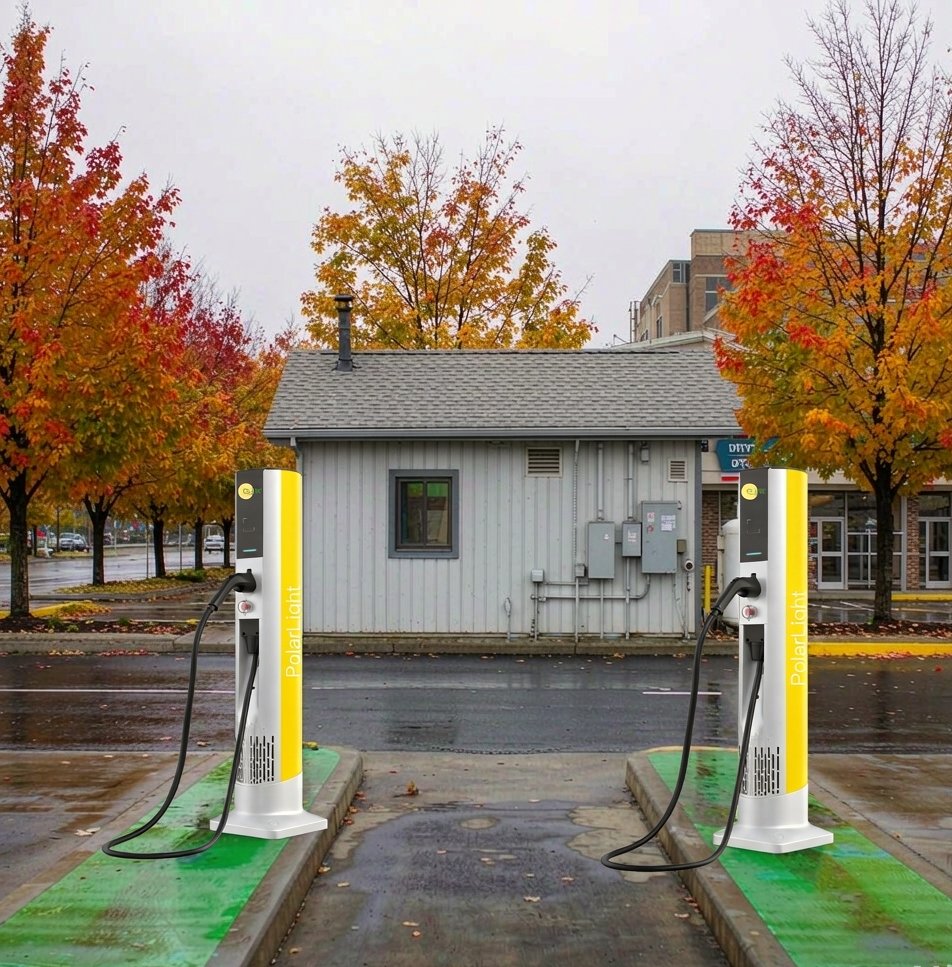
Do you know that Ontario now has a separate electricity rate class just for EV charging stations, and that the way to qualify is to stay under-used? It is called the EVC Rate. Introduced by the Ontario Energy Board and live on Hydro One since January 1, 2026, it lets an eligible charging station pay only 17 per cent of the standard retail transmission service rates - the part of the delivery charge that recovers the cost of moving power across the high-voltage grid.
The gate is a number most site hosts have never been asked about: load factor, the share of your peak you actually use across a month. Hydro One calculates it as monthly energy in kilowatt-hours divided by peak demand in kilowatts times the hours in the month - their own example is a station that uses 14,880 kWh in a 744-hour month at a 100 kW peak, which lands exactly at 20 per cent. To qualify, a station needs at least one DC fast charger, at least 90 per cent of its monthly peak demand must go to EV charging, average monthly maximum demand between 50 and 4,999 kW, a 12-month average load factor of 20 per cent or less, and it must not primarily serve commercial or public-sector fleets.
The money is real. On Hydro One's own worked example, a station with a 100 kW monthly peak pays $2,948.90 in the affected delivery line items on the standard rate and $2,458.09 under the EVC Rate - $490.81 a month back, roughly $5,900 a year. But read the table carefully: the distribution volumetric rate ($22.5201 per kW of peak in the same example) does not move. The discount covers the transmission component only, so a spiky peak still costs full price on the distribution side.
Our read: this is a ramp-up subsidy written as a rate class. The years when a new station is quietest - the stalls half empty, the revenue thinnest - are exactly the years the discount applies, and if the site succeeds and its load factor climbs past 20 per cent, the rate goes with it. You opt in with a signed self-declaration, it applies from the next billing period, you must tell Hydro One within 30 days if the station stops qualifying, and they monitor the 12-month average. That is more honest than it first sounds: the thin years are precisely when a host needs the help.
Two boundaries before you plan around it. First, this is Hydro One's implementation of an OEB direction - if your station sits on another distributor, start from that utility's own rate page, not from this one. Second, the demand-charge arithmetic on the distribution side still rewards peak management, so load control does not stop mattering. That is the math our commercial model is built around: we install PolarLit 1 chargers on business properties at no capital cost and share the revenue with the owner, so the demand-charge account is ours to manage together, not a bill the property faces alone.
Source: Hydro One - The Electric Vehicle Charging Rate (effective January 1, 2026) ↗