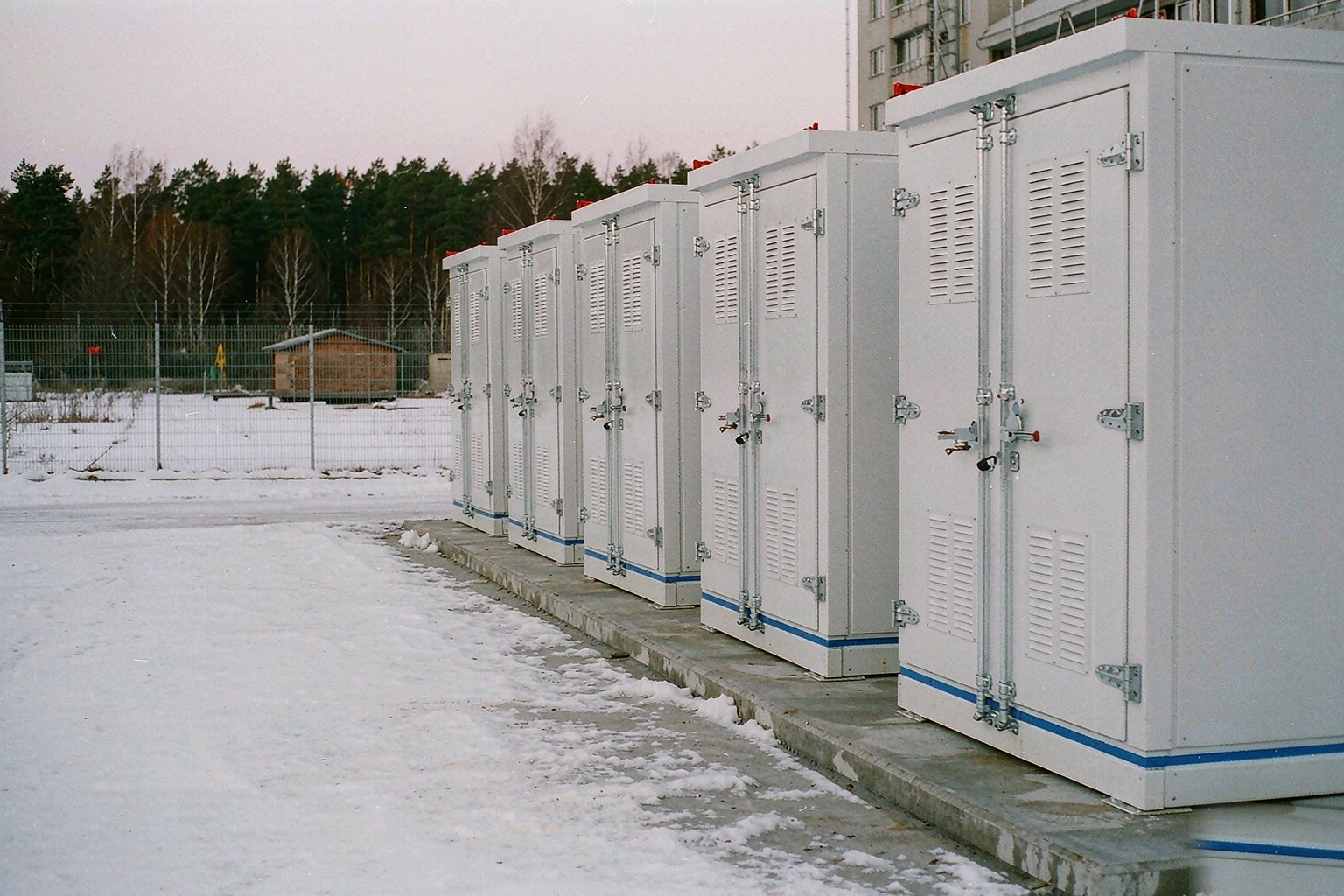
Power Storage System
A battery buffer between the service and the load, sized to the fifteen minutes that decide the bill.
The short version
What the buffer buys you, and what it does not.
A Community Power Hub can be built from a single module like this one, or combine several at once — whatever the site needs. This page describes one building block.
A battery buffer between the service and the load. It carries the step when several vehicles start at once, so the site buys less energy in its most expensive fifteen minutes.
A battery does not lower your total energy use; it reshapes when you draw it. The buffer carries the step when several vehicles start at once, so the service sees one smooth draw instead of a spike. Sized to your interval data, it targets the fifteen minutes that set your demand charge — the month's worst quarter-hour, not the annual average.
Between the service and the load, carrying the step the grid would otherwise see.
Generation and charging on the same controller, so the buffer is sized to real use.
Interval data and the fifteen minutes that decide your demand bill.
What we publish, and what we do not
Numbers we can verify, and numbers we will not guess at.
- Capacity
- To be published
- Certification
- To be published
- Warranty
- To be published
- Availability
- To be published
Specifications stay blank until the data sheet is verified. Ask us for the current revision before you specify a site.
Where it earns its place
Three places this usually pays for itself.
Manufacturing
On a demand-billed account, the month's worst quarter-hour can dominate the bill.
Charging hubs
Several vehicles starting at once is a step load. The buffer takes it so the service does not have to.
Data & critical loads
Bridge on your own supply while the connection builds, then keep it as backup.
What people ask before they specify
The questions that decide whether the module belongs in your site.
- Does a battery lower my total energy use?
- No — it reshapes when you draw energy. The value is in shaving the peak that sets your demand charge, and in buffering the step loads from charging.
- How is the size decided?
- From your interval data, targeting the fifteen minutes that drive your demand bill. We size to your worst quarter-hour, not the annual average.
- Does it work with generation and charging?
- Yes. Storage sits on the same controller as solar and DC charging, so the whole site is balanced as one system rather than three separate ones.