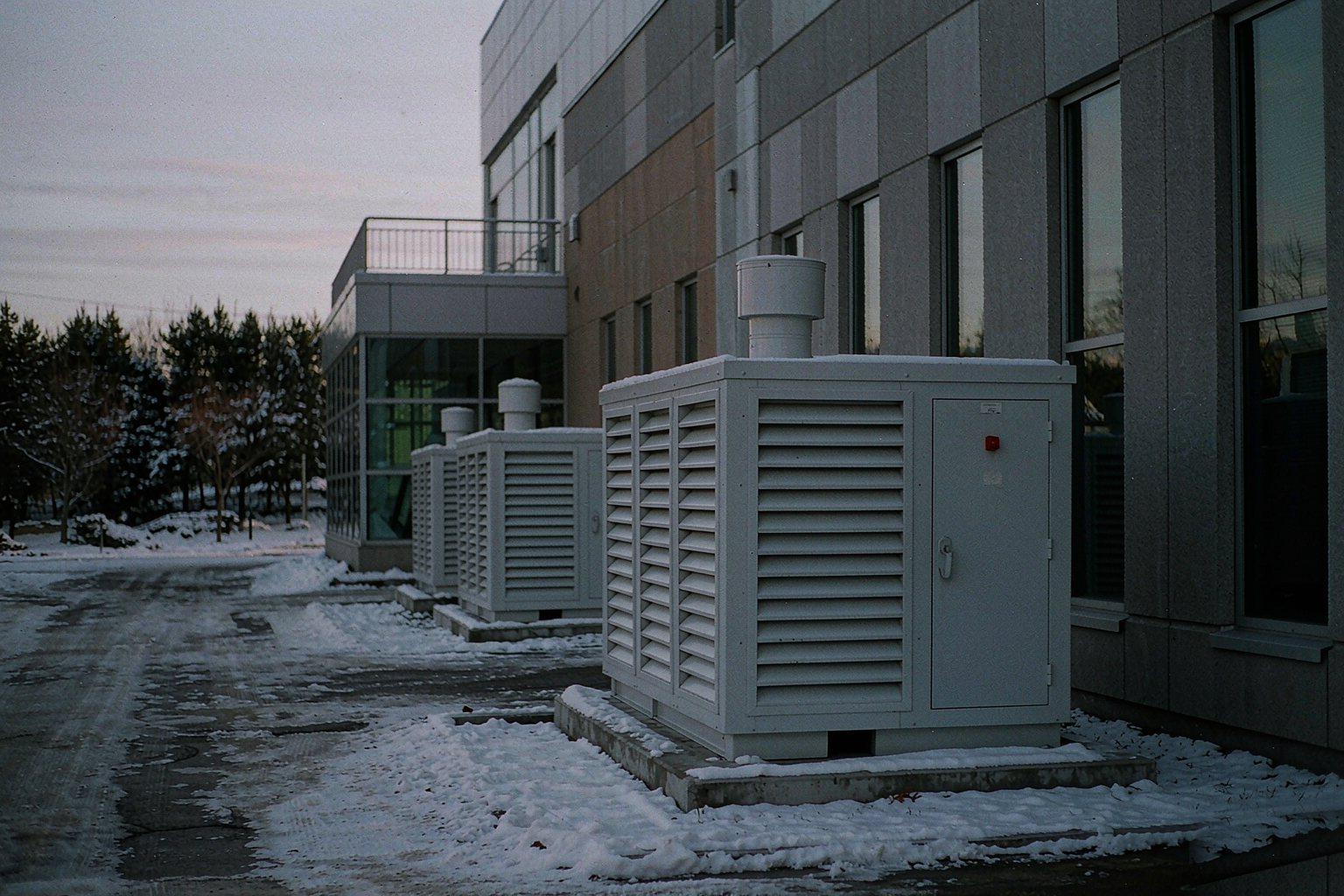
Onsite Power Generation
For sites the grid will not reach in time: modular generation, integrated with storage and charging.
Built for these operators
High volumn condense power demands will no longer stops sustainable development.
EV supercharging stations
DC fast charging pulls a concentrated load in minutes. Where the utility connection lags the queue, on-site generation lets the stalls run while the grid connection is still being built.
AI server centers
Training and inference draw a steady, around-the-clock load and reject heat. These sites are often placed where land and power are cheap but the grid is weak — local generation closes that gap.
Uber & airport fleets
Vehicles return on a fixed turnaround window and leave charged. A depot pulls its whole fleet's demand into a few hours; generation keeps that window off the connection's edge.
Public transportation
Bus depots and electric boats run to a published timetable. Charging has to land inside the layover or the overnight window — generation holds that window when the connection cannot.
Tourist attractions
Seasonal crowds arrive where the grid was sized for a quiet off-season. Generation meets the peak without paying to over-build the service for twelve quiet weeks.
Highway-corridor towns
Small towns along the corridor need charging and services but sit far from a strong connection. Local generation brings the capacity to where the traffic already stops.
The short version
What integration means on your side of the meter.
A Community Power Hub can be built from a single module like this one, or combine several at once — whatever the site needs. This page describes one building block.
Where the grid is the constraint, modular generation sits on your side of the meter and runs to a schedule or on demand. Storage carries the transients; the charging points see a steady service.
Where the connection will not arrive in time, a modular generator sits behind your meter and runs to a schedule or on demand. Storage absorbs the swings so the charging points see a steady service; when the grid is up, the unit throttles back or idles. The rating is sized to the load it has to carry, not to a fixed catalogue size.
Behind your meter, where the grid is the constraint.
Storage rides the transients; charging sees a steady service.
The load profile and how often the grid lets you down.
What we publish, and what we do not
Numbers we can verify, and numbers we will not guess at.
- Rating
- To be published
- Certification
- To be published
- Warranty
- To be published
- Availability
- To be published
Specifications stay blank until the data sheet is verified. Ask us for the current revision before you specify a site.
Where it earns its place
Three places this usually pays for itself.
Remote & resource
Communities, mines and camps that run on diesel today.
Construction & events
Power that arrives before permanent service does, then leaves.
Data & critical loads
Energise on your own supply while the connection builds, then keep it as backup.
What people ask before they specify
The questions that decide whether the module belongs in your site.
- When does behind-the-meter generation make sense?
- When the grid connection is the constraint — remote sites, construction, events, or a service date that will not arrive before you need power.
- How does it work with storage and charging?
- The generator runs to a schedule or on demand; storage rides the transients so charging points see a steady service. Together they act like one local supply.
- Is it a Clink-branded unit?
- We specify the generator into your site as part of the Community Power Hub, integrated with storage and charging on one controller. The specific unit is confirmed at the specification stage.