News & notesField note
Do you know? Your home charger may now pay you 10 cents a kilowatt-hour
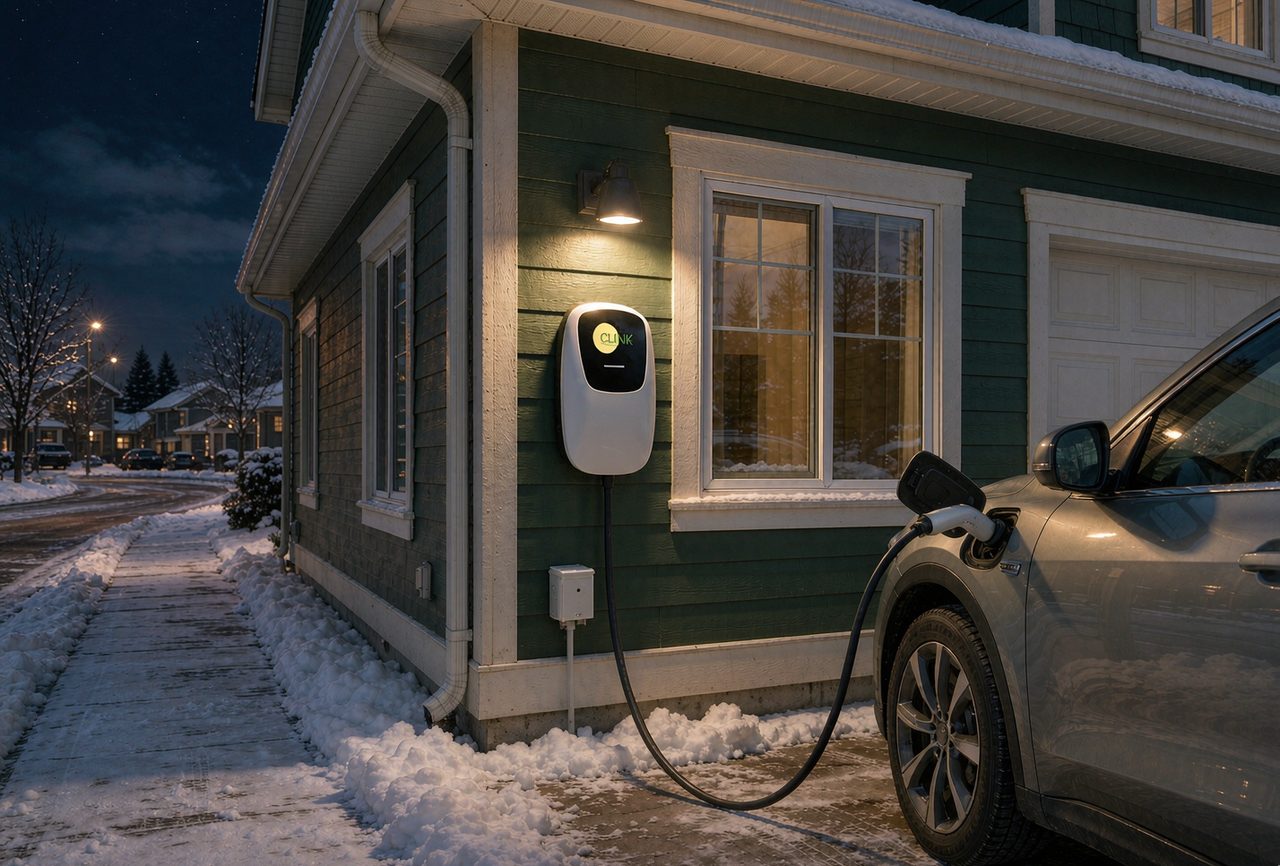
Do you know that since the first of July this year, plugging in at home can pay you back? Toronto-based ChargeLab raised its home charging reward to 10 cents per kilowatt-hour for single-family homeowners across Canada. The fine print is worth reading, but the headline is simple: the electricity you put into your own car can come back to you as cash or gift cards.
First, how it works. The reward is calculated by software reading your charger, because the charger speaks OCPP, the open protocol that lets a charging unit talk to a company's system. Home chargers listed as supported include the Autel Home, Wallbox Pulsar Plus, Siemens VersiCharge, Grizzl-E Smart and the SWTCH / Home EVL007. You do not buy a new box. There is no fee, no subscription and no minimum before the first payout, and the money arrives once a quarter.
Now the math, which nobody puts on the landing page. ChargeLab's own example uses an average driver putting about 3,500 kWh a year into the car: the reward comes to roughly $350, the electricity roughly $343 at an off-peak rate of 9.8 cents, so about seven dollars ahead. But Ontario's Ultra-Low Overnight rate regulated for November 2025 through October 2026 is 3.9 cents a kWh. Charge those same 3,500 kWh overnight and the power costs about $137, and the reward clears it with a couple hundred dollars to spare. Charge on peak instead and the numbers go backwards. Our read: this is a bill you were already paying, partly refunded. It is not a second income, and anyone who tells you it wipes out your charging cost is rounding.
The more interesting piece is not the money. What you actually get is software: a schedule that pushes your charging into the cheap hours, a record of every session, and free roaming in the app onto public networks like SureCharge, Filgo, Nova Scotia Power and the Ivy Charging Network with no roaming fee. The underlying shift is that a home charger stopped being a dumb box in the garage. It became a device you can point at a different network, which is why the protocol question now matters more than the amperage question when you buy one.
That is where we come in. NorthernLit 1 runs OCPP 1.6J, the same open standard these programs read, which means the hardware does not have to belong to a network to be useful inside one. We would rather say the quiet part too: ChargeLab lists specific supported models, and confirming your particular unit is on their current list is their call, not ours. Check before you sign up, and check again in a year, because these programs are funded through carbon credits under the federal Clean Fuel Regulations and their terms move.
Two limits worth knowing before you enrol. The reward is for single-family homeowners; ChargeLab runs separate versions for multi-unit and business properties with different terms. And the reward only beats your bill if you charge at the cheap hours, so the schedule is the part that pays. For the other side of the ledger, the provincial Peak Perks program runs the other way entirely - it pays you for agreeing to let the grid shed your load during summer peaks, not per kilowatt-hour you consume.
If the only thing you take away is a shopping criterion: before you buy a home charger, find out what protocol it speaks. A few years from now the difference between an open unit and a closed one is the difference between being paid and not being asked.
Source: ChargeLab - Get paid to charge your EV in Canada (July 1, 2026) ↗