News & notesField note
Do you know? The tank that sips sunlight — and what energy resilience means off the battlefield
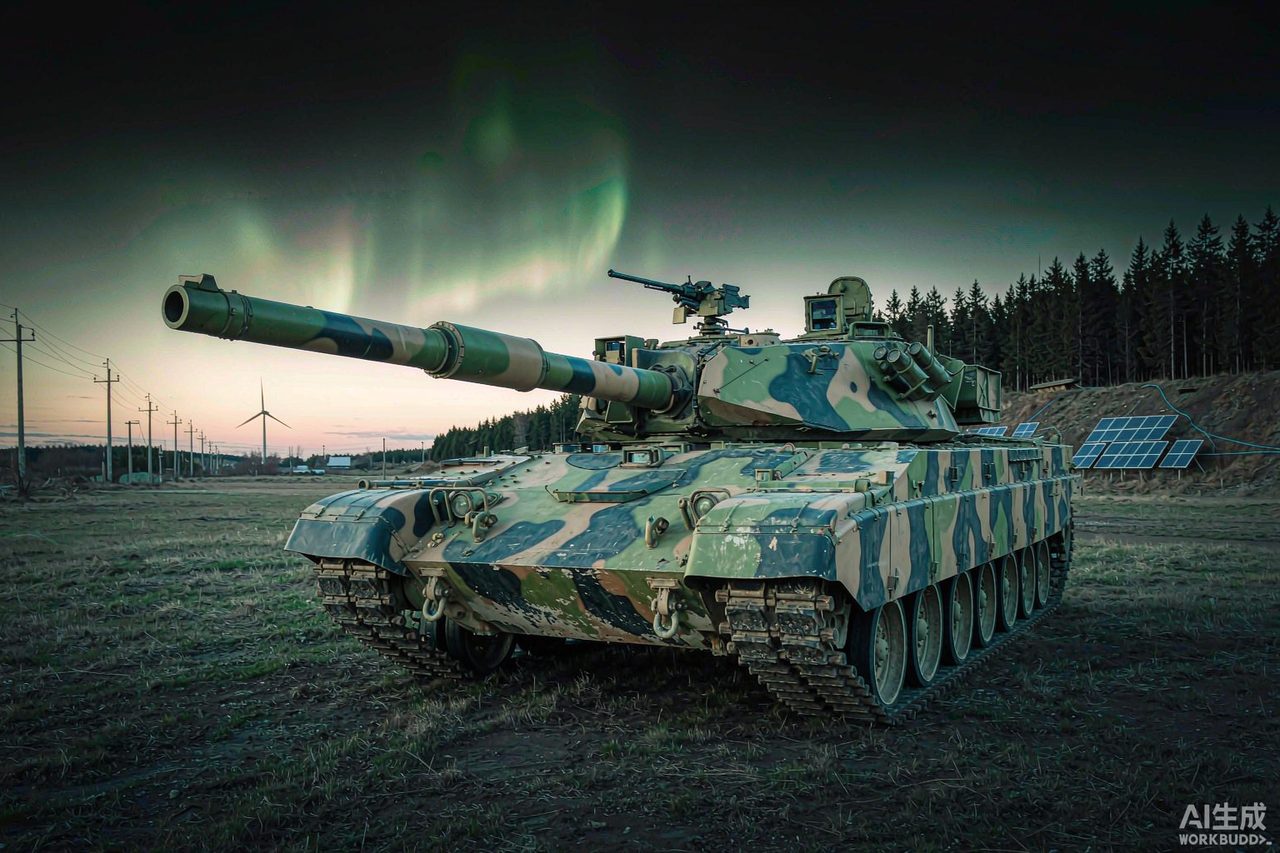
Do you know that the next main battle tank may quietly sip sunlight between fights? The shift is no longer theoretical. Across the United States, Germany and beyond, the headline move in armored-vehicle design is hybrid-electric drive — and the reason has almost nothing to do with the climate.
The U.S. Army’s next Abrams, the M1E3, is being built around a hybrid diesel-electric powertrain, with its first prototype delivered in late 2025 and more slated to enter formations through 2026. Germany’s Leopard 2A8 ships “hybrid-ready,” and its successor programs point the same way. The pattern is global: several armies are exploring high-voltage hybrid drives that double as onboard power banks.
The appeal is not range or speed. It is what engineers call the “hotel load” — the steady draw of sensors, communications, optics and defensive systems when the engine is off. A hybrid lets a tank keep those systems alive, silent and cool, without idling its turbine or burning fuel it may not be able to resupply. Less heat means a smaller thermal signature; less noise means harder to find by ear. In a fight where drones hunt by heat and sound, that is survivability, not virtue-signalling.
Strip away the armor and the math is the same problem Clink solves for a house or a business. Your site has a hotel load too — the charger, the freezer, the servers, the machines — that you want alive without tethering to a fragile, pricey grid. Behind-the-meter (the user side of the electricity meter, where you control your own generation and storage) solar and storage let you generate where you stand, bank it, and ride through an outage or a demand-charge spike. We are not fielding tanks. But the logic is identical: stop paying a tax on every kilowatt you did not have to ship in, and keep your critical loads running on your own terms.